

Why Do Chess Players Resign Early?
If you’re a regular enjoyer of chess tournaments, you might have noticed that chess players (especially Grandmasters and other top players) tend to surrender their games way too early (at least from a non-pro perspective). Today, we’ll try to shed some light on why chess players resign games and give you some reasons as to why you probably shouldn’t give up on your games as quickly. Stay tuned and we’ll dive right in.
Early Resignation: An Example From Magnus Carlsen
While the ultimate goal of chess is obviously to checkmate your opponent, there are times when players may decide to resign before the game reaches its conclusion in a checkmate (or draw). Here you can see chess Grandmaster Magnus Carlsen resigning a game early against Alexey Sarana in the World Blitz Championship 2022 in a particularly funny way:
While it was a funny resignation, the question of why Magnus Carlsen surrendered still remains. Let’s look at the position on the board (black to play):
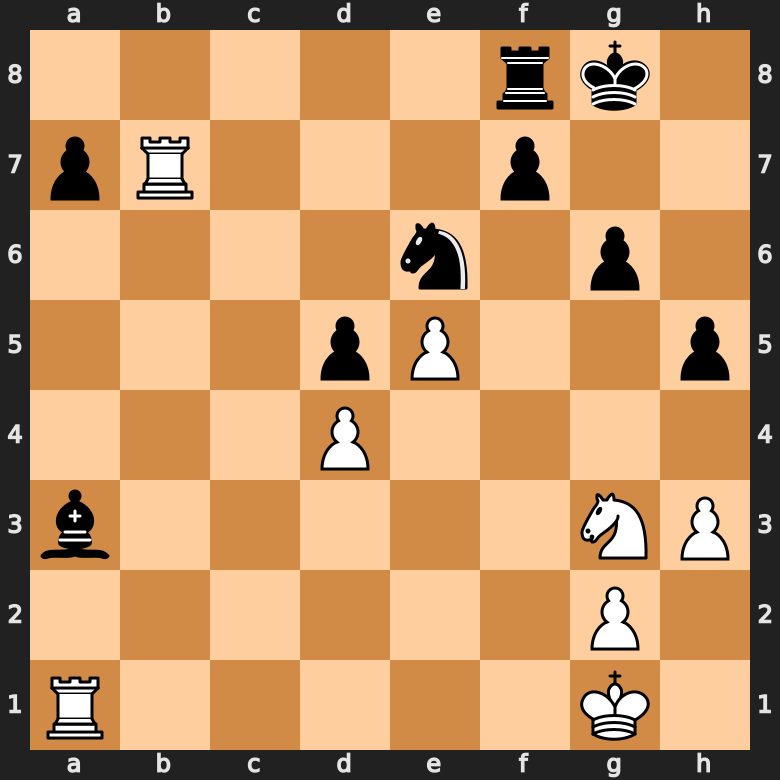
Can you spot why Magnus Carlsen resigned so early in the game? To be fair, the position is already lost, no matter what Magnus plays here. If he goes for the best possible move Nd8, Sarana will simply move his rook to b5 and scoop up the undefendable pawn on d5, collapsing Magnus’ position. You can analyse this exact position with stockfish on Lichess.
In the game Magnus moved his bishop back to e7, which was simply a blunder. It can just be taken by the rook on b7. While moving his piece he accidently knocked over his knight, adding to his frustration in the already lost position.
In this case, the reason for the early resignation by Magnus was a combination of his blunder in together with a healthy dose of frustration. That brings us neatly to the next section, which will talk about the main reasons for early surrenders in chess.
5 Reasons Chess Players Resign Before a Checkmate
Obviously players have very little to gain and everything to lose when resigning early. Naturally, there must be some good reasons to resign, right? Well, as always with human psychology, most chess players probably aren’t acting rationally when it comes to resignation. Still, we tried to narrow down 5 reasons why a lot of players give up before the games reaches a conclusion on the board.
Resigning a Lost Position
The most obvious reason for an early resignation is a completely lost position. Grandmasters are incredible at gauging positions and they know when they are lost on the board. With a strong opponent it is a calculated risk to resign, assuming they can and will punish you without making any mistakes of their own. That’s why a lot of pro players simply want to stop playing, even they can theoretically still win the game (although unlikely).
However, resigning a lost position only really makes sense if your opponent plays perfectly, which doesn’t even happen at Grandmaster level. We’ll cover why you shouldn’t resign your games (even in lost position) later in this article.
Giving up out of Frustration
As we saw in the example above, human psychology plays a big role in chess. Part of why Magnus Carlsen resigned in that position (or at least what pushed him over the edge), was him knocking over a piece. He was frustrated with himself and simply didn’t want to continue to play the game.
It is completely normal to feel frustrated and enraged during chess (especially when you’re losing), which is why we have a guide on how to stop chess rage and tilt here on Chessily.
Respect For The Opponent
Some positions are simply not winnable anymore, for example when a forced checkmate is imminent. Usually, both players recognize this and communicate it with non-verbal body language. In this case, it is generally accepted to be good sportsmanship to simply resign the game, as it avoids the unnecessary continuation of the game.
To surrender early means to respect the opponent and his time. At least when there is a forced checkmate coming.
Surrender To Avoid Tilt
Tilt is known as a downward spiral in a player’s performance, which gets worse and worse with every game they lose. Tilt is very tied to frustration, which is why players tend to avoid playing on in frustrating games. Here, a surrender can be seen as a way to increase the longevity of a player and increase the long-term/tournament performance.
Essentially, if a player becomes emotionally invested in the game and becomes frustrated or angry, they may choose to resign in order to avoid becoming more upset.
Resigning as a Statement
Last but not least, a resignation can also be a form of a statement made by a player. We recently saw this with Magnus Carlsen (why do we keep talking about him in this article?) resigning on move 2 against Hans Niemann, in the continuation of the “Hans Niemann cheating scandal”:
Magnus wanted the chess world to know that he isn’t comfortable playing a known online cheater. Hence, he surrendered on move 2, significantly impacting his own chances in the tournament (which he still won).
There are countless other examples of resignations as statements, not only in the chess world by the way!
You (Probably) Shouldn’t Surrender Early!
If you ask any pro chess player, they will probably tell you not to resign games prematurely. At the same time, they’re all resigning games left, right and center. It’s really Classic case of “do as they say, not as they do”. I’m here to convince you not to give up on your chess games before you’re checkmated (or even secured a draw):
- You never know what’s going to happen. This is the most obvious case. Especially beginners and amateurs blunder all the time! It is not uncommon to see someone blundering a queen (or even two) – so don’t give up, even when your position seems completely lost. You have nothing to gain, but everything (or at least your rating) to lose by resigning early.
- Sometimes you might evaluate a position incorrectly. While Grandmasters do have some merit in resigning obviously lost positions, I want to urge you to be careful when assessing your own positions. Sometimes a position that seems hopeless is actually completely playable or even winning. Play on and see where you end up.
- Practice and improvement. By continuing to play even when the game is difficult, you have the opportunity to practice your skills and improve as a player. Resigning early means missing out on this opportunity. Heck, maybe you’ll end up in the exact same position in the future and know what mistakes to avoid – you never know!
Browse Through Our Other Blog Articles
- Chess Etiquette: The Dos and Don’ts of the Game
- Stockfish vs. GPT-4 (Bing AI) in a Game of Chess
- Chess and Intelligence: Can You Be Smart and Bad at Chess?
- How To Play Chess Together Online With Friends for Free
- The Checkmate Trap: Understanding and Overcoming Chess Addiction
Sources
- FIDE Laws of Chess — the official rules of chess
- FIDE Title Regulations — official requirements for FIDE titles
- FIDE Ratings — official rating and title lookup
- Elo rating system — how chess ratings are calculated